Paintless dent removal (PDR)
A technique used to repair minor dents and dings from the body of a vehicle without the need for repainting
Paintless dent removal (PDR) is a technique used to repair minor dents and dings from the body of a vehicle without the need for repainting. It’s particularly effective for small to medium-sized dents where the paint has not been damaged. Here’s how the process generally works:
1. Assessment:
- Evaluate the Damage: Determine if the dent is suitable for paintless dent removal. PDR works best on shallow dents where the paint is intact and the metal hasn’t stretched or cracked.
2. Access:
- Gain Access to the Dent: Depending on the location of the dent, access may be gained from behind the panel. This often involves removing interior panels, tail lights, or other trim pieces to reach the backside of the dent.
3. Tools and Techniques:
- Specialized Tools: Use a variety of specialized tools designed for PDR, such as metal rods and picks. These tools allow technicians to carefully massage the dent out from the inside, working in a systematic manner to gradually reshape the metal.
4. Technique:
- Pushing and Massaging: Technicians use these tools to push the dent out from the inside. They apply controlled pressure and manipulate the metal to restore it to its original shape.
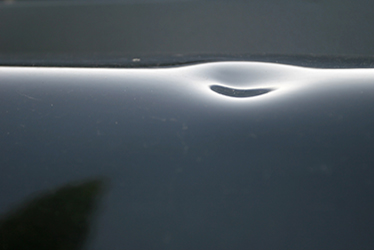
- Reflective Light: Use of reflective lights or boards helps technicians to see the subtle changes in the surface of the metal as they work, ensuring the dent is properly reshaped.
5. Finishing Touches:
- Check and Fine-tune: After the dent is removed, technicians meticulously inspect the area to ensure the dent is completely gone or minimized to the maximum extent possible.
- Clean Up: Replace any interior panels or trim pieces that were removed for access, ensuring everything is put back together correctly.
Benefits of Paintless Dent Removal:
- Preserves Original Paint: Since no painting is involved, the vehicle retains its factory finish, which maintains its value and appearance.
- Cost-effective: PDR is generally cheaper than traditional body repair methods that involve sanding, filling, and repainting.
- Time-efficient: It can often be completed in a shorter timeframe compared to conventional repair methods.
Limitations:
- Paint Damage: PDR is only suitable for dents where the paint is intact. If the paint is scratched or cracked, traditional repair methods may be necessary.
- Dent Location: Some dents in difficult-to-access areas or where the metal has stretched too much may not be suitable for PDR.
Paintless dent removal is a highly skilled technique that requires training and experience to perform effectively. It’s best carried out by trained professionals who understand the intricacies of metal manipulation and have the right tools for the job.